
Let’s Be Real
Gifted Products, Honest Reviews, and the Messy Middle

The response to last week’s newsletter blew me away. Editors, writers, founders, and creators all said the same thing:
‘We’re exhausted— and we’re ready for a better way to tell product stories.’”
One editor DM’d me: "This hit me on Day 2 of Prime Day. I’m so spiritually drained." Another replied: "I thought I was the only one cringing every time I had to write another 'life-changing lip balm' piece." Another let it OUT and then thanked me for letting her vent = all great stuff.
Then I went on a trip to Sicily with my husband and one-year-old daughter (note to self: babies and long-haul travel are not for the faint of heart). After a lot of pasta, wine, Mediterranean sun, and a battle with jet lag, I came back thinking even more deeply about the conversations this newsletter started.
So here it is: the sequel.
The letter where we go a little deeper, get a little more honest, and lay out a framework for how brands and media can work together to tell product stories that actually feel real again.
The Problem: We’re Stuck in the Same Story
You know the format by now:
"I’m a trainer, and these are the only sneakers I wear."
"This $9 Amazon product changed my life."
"I won’t go anywhere without this one viral item (and it’s on sale)."
These stories are everywhere— because they work(ed). They drove clicks. They ranked well in search. They moved product.
But they also made content feel... interchangeable. Flat. Less trustworthy. And for many of us on both sides of the media-brand equation, they’re making the job feel a little soulless.
It’s not just affiliate fatigue. It’s storytelling fatigue.
Let’s Also Be Fair
But beyond the tired headlines, another issue bubbled up, and it’s just as telling about where the media/brand dynamic is fraying.
A couple small brands reached out last week - upset about harsh, negative reviews they received from writers who had requested product samples via Press Hook. These weren’t unsolicited gifts. In many cases, the journalist directly asked for the item. And then..
published a takedown.
So let’s talk about it. Even though it’s every publicist’s worst nightmare (the kind of thing that makes you want to crawl under your desk, disappear, or fake a Wi-Fi outage).

Because this isn’t just about tired tropes; it’s about boundaries, transparency, and mutual respect.
Where things get tricky:
Writers need to be honest, that’s the whole point.
Brands want visibility and to know that honest feedback is part of the game.
But when a gifted/offered or even requested product results in a very negative review — especially for small businesses — it raises questions.
Not about censorship. But about intention. Respect. And clarity.
If you're a journalist or content creator:
Honest reviews are critical. But if you receive a gifted product (especially ones you asked for directly) and your experience was poor, consider this:
Giving feedback directly. A quick email saying “this didn’t work for me, so I’ll be passing on coverage” goes a long way.
Opting out of the feature. You’re not obligated to publish — especially if what you’d write would feel needlessly damaging to a small brand.
Considering tone and framing. Critique is fair. But there’s a difference between transparency and teardown.
This isn’t about pulling punches. It’s about using the same editorial judgment you’d use anywhere else: Does this add value to my audience? Or just drama?
If you're a brand:
Remember, a sample is not a guaranteed glowing review. It’s a door opener, not a contract.
Don’t expect coverage just because you sent something.
Be ready for honest feedback, and use it to improve.
Vet media partners (which we’re doubling down on too).
Where Press Hook Stands:
We’re building a platform that supports earned, affiliate, and paid media opportunities, but with clear boundaries:
If a writer requests a product, we expect the interaction to be constructive, even if the result is non-coverage.
We encourage journalists to pass if it’s a bad fit - rather than write something damaging just because it was sent.
We’re doubling down on profile vetting and transparency, including how contributors list their affiliations.
Because yes, writers deserve the freedom to tell the truth. And brands deserve to be treated with fairness and clarity.
And Then There’s This: Is AI Coming for Commerce, Too?
And just as we're all trying to bring more transparency and care back into this ecosystem… AI is getting ready to automate it entirely.
Last week, news broke that OpenAI is building a checkout system into ChatGPT, allowing it to take a commission on product sales directly from the chatbot. Early demos have already been shared with brands and platforms like Shopify.
Let that sink in:
Not only will AI recommend what to buy, it will complete the sale, too.
That means:
Fewer steps between suggestion and purchase
More pressure on brands to be “AI visible” → G.E.O.
Even more incentive to simplify product stories down to keywords and conversion lines
And honestly? That’s exactly why human editorial judgment still matters.
Because when headlines all start sounding like they were written by an algorithm — ‘This $9 Amazon product changed my life!’ — how will consumers know what to trust?
We need real storytelling now more than ever. Not just to stand out from the crowd, but to stay credible in a world where even your chatbot might earn a commission (LOL).
So What Can We Do Instead?
We’ve aired the frustrations —> now here’s the fix.
Because there is a better way forward, and it starts with how we approach storytelling from both sides.
For Brands Pitching Media:
Lead with context. What’s the broader story? How does this product fit into culture, lifestyle, or a need right now?
Bring proof. Data, founder POV, customer quotes. Not just buzzwords.
Suggest angles. Think: roundups, expert insights, seasonal relevance — not just "we launched."
Ditch the overclaims. If it’s "life-changing," show us how. Otherwise, let the product speak for itself.
Be clear about the ask. If it's affiliate-friendly or paid, say that. Transparency builds relationships.
For Journalists and Creators:
Use "I" intentionally. Personal POV is powerful— but don’t let it become a crutch.
Dig into why it works. Instead of "changed my life," explain what problem it solved (or didn’t).
Get meta. Readers are smart. Say, "This thing is everywhere, so I tried it myself."
Experiment with format. Try: "Tested & Ranked," "I replaced my go-to with this," "The 3 best versions of..."
Own your lens. You don’t have to sell. You have to contextualize.
The Receipts: Real Articles to Learn From (and Avoid)
Let’s get specific. Here are recent consumer product stories that feel stale vs. others that feel fresh:
🚫 What to Move Away From:
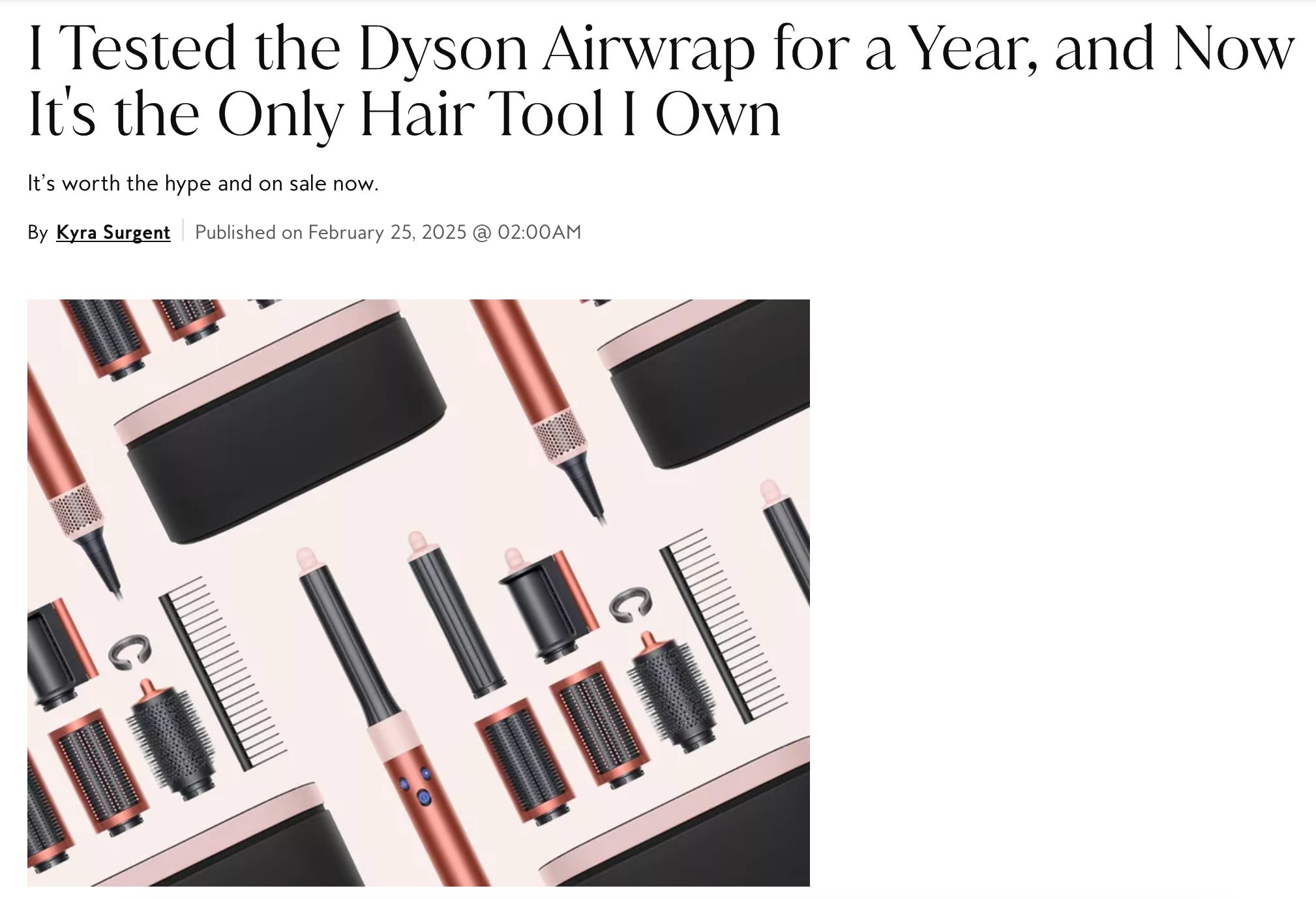
"I Tested the Dyson Airwrap for a Year, and Now It’s the Only Hair Tool I Own" (InStyle, Feb 2025)
Absolutist headline. Anchored around a Amazon sale.
"Get the Shark Stick Vacuum That 'Changed My Life' at 40% Off" (New York Post, 2025)
Overhyped claim. Product-as-personality trope.
"This Pillowcase Actually Helped My Skin (& It’s On Sale)" (Refinery29)
Old formula: mild skincare claim + urgency sale language.
✅ What to Write More Of:
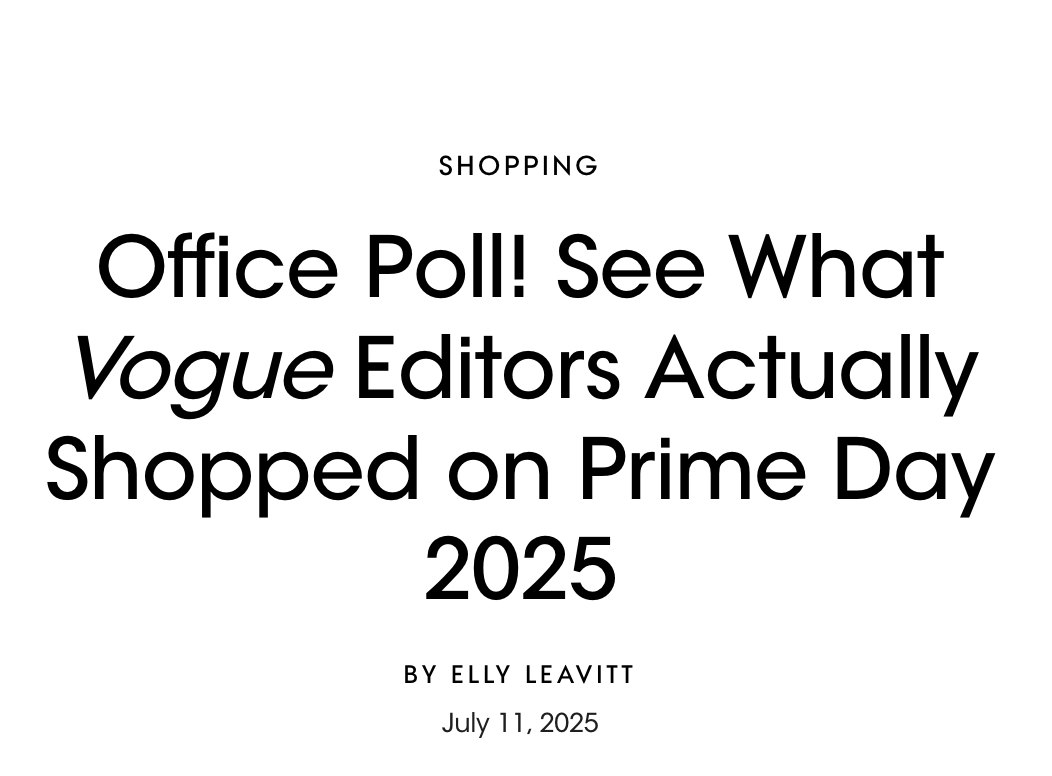
"What Vogue Editors Are Actually Buying During Prime Week" (Vogue, 2025)
Collective POV. No "this is the only thing" language.
"These 9 Accessories Are a Must-Have for Holiday Travel (Tested & Reviewed)" (InStyle, 2023)
Editorial team tested 106 products. Context > claims.
"I Never Thought I’d Enjoy Antiquing. Then It Changed Everything." (PopSugar, 2025)
Narrative-led, culturally aware, product comes second.
The Bottom Line
We don’t need to ban affiliate links (though ChatGPT might soon do that for us). Or stop recommending great products. But we do need to stop pretending that every product needs to change someone’s life in order to be worth sharing.
The best product stories feel honest. Useful. Sometimes even delightfully ordinary.
Let’s make room for that kind of storytelling again.
Let’s be real.
- Michelle aka “Captain Hook”
Love this! Thank you for sharing these headline tweaks Michelle!